Have you ever thought about the impermanence of all things? About the fact that everything around us is constantly changing, arising, and fading away? This universal truth, along with the fragility of life and the absence of a permanent self, is at the core of Buddhist philosophy and can be a powerful source of insight and transformation.
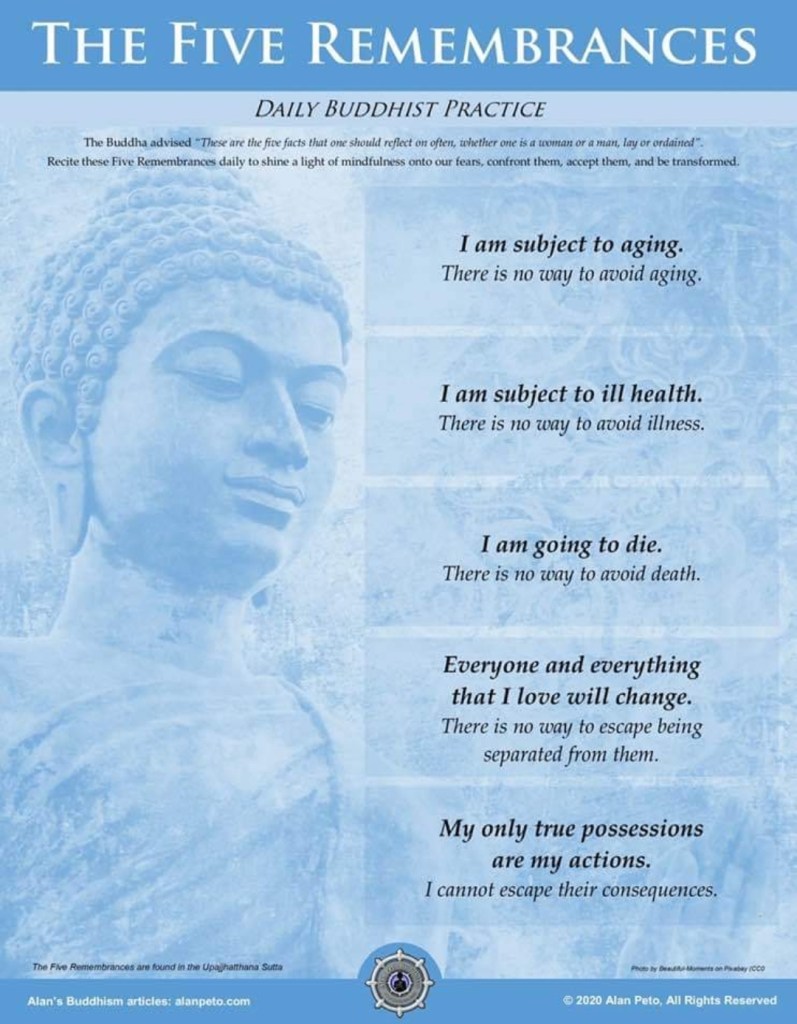
In the Ariyapariyesana Sutta, a discourse on the Noble Quest, the Buddha advises us to reflect on five facts about life’s fragility and our true inheritance: that we will inevitably age, fall ill, and die; that we will inevitably be separated from all that is dear to us; and that our actions are the cause of our future experiences. Reflecting on these five facts can lead to a deep understanding of impermanence and non-self, which are universal truths.
Impermanence means that everything in life is constantly changing and that nothing is permanent. This includes our thoughts, feelings, relationships, and everything else that we encounter. Non-self means that there is no permanent self, but rather, we are a combination of the body, mind, and other factors that arise and pass away based on conditions.
Contemplating these universal truths can help us let go of destructive attachments and cultivate the factors necessary for Awakening. In fact, according to the Ariyapariyesana Sutta (Discourse on the Noble Quest) MN 26, the first three reflections on impermanence, non-self, and the fragility of life were the very insights that inspired the Buddha to renounce his royal status and embark on a spiritual path towards Enlightenment.
Reflecting on impermanence and non-self doesn’t mean denying the beauty and joy of life. Rather, it invites us to appreciate the present moment and to cultivate qualities such as compassion, wisdom, and equanimity. By letting go of our attachments and realizing the true nature of reality, we can find a deeper sense of peace and purpose in our lives.
Contemplation of these facts can lead to a deep understanding of impermanence and non-self, which are fundamental truths that can help us relinquish destructive attachments and cultivate the factors necessary for awakening. As the Buddha himself experienced, these insights can be a catalyst for spiritual transformation and the pursuit of enlightenment.
Perhaps, take a few moments today to reflect on the impermanence and fragility of life. Allow these insights to inspire you to let go of what no longer serves you and to cultivate the factors necessary for awakening. Who knows? You might just find a new perspective on life that brings you greater clarity, joy, and freedom.
———-
The discourse advises all to reflect upon these facts, often:
1. I am sure to become old; I cannot avoid ageing.
2. I am sure to become ill; I cannot avoid illness.
3. I am sure to die; I cannot avoid death.
4. I must be separated and parted from all that is dear and beloved to me.
5. I am the owner of my actions, heir of my actions, actions are the womb (from which I have sprung), actions are my relations, actions are my protection. Whatever actions I do, wholesome or unwholesome, of these I shall become the heir. This cause and effect will be my Kamma and not to blame others.
(AN 5.57)
—–
 Nicholas Gerace